
Fork N Sausage
SayGames LtdPuzzle
4.63.49K Reviews
- Version
- 3.25.12
- Installs
- 50.00M
- Age Rating
- Everyone
Screenshots
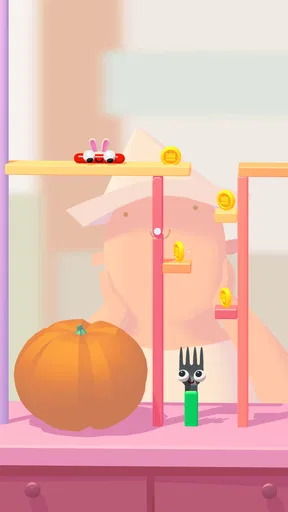
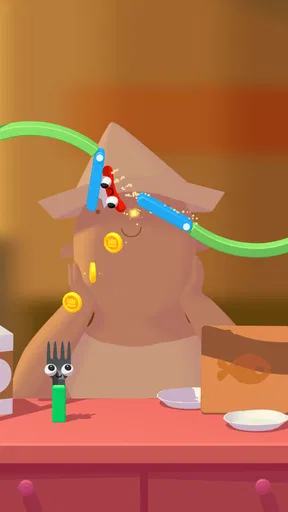
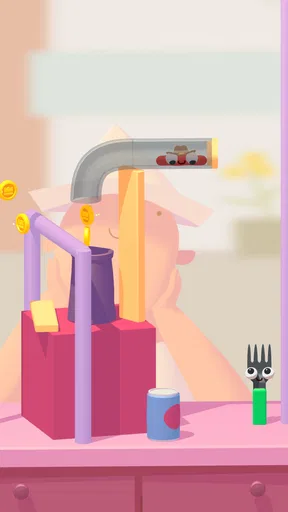
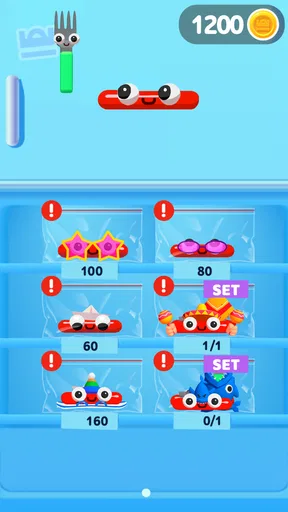
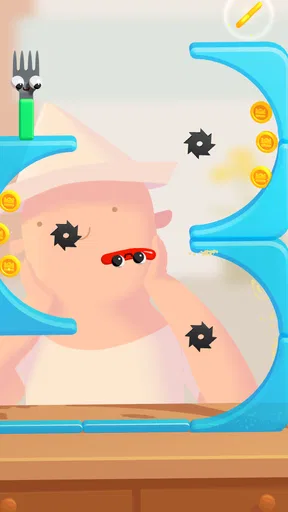
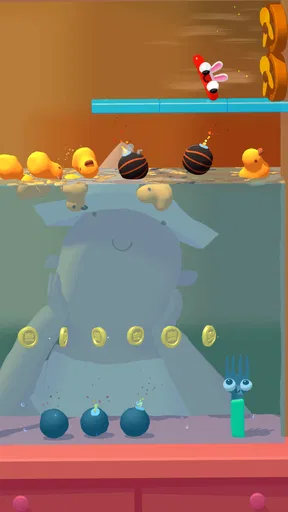
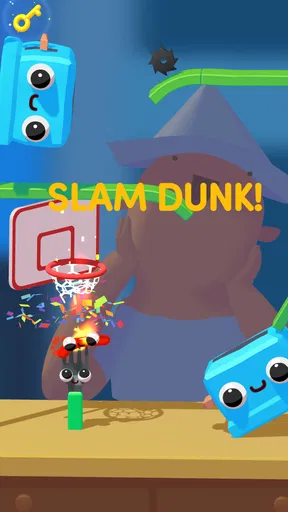
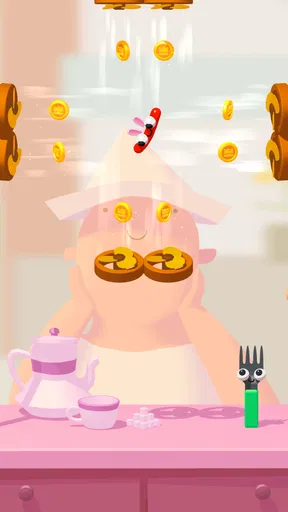
Our Review of Fork N Sausage
 Analysis by Appyee
I went into Fork N Sausage expecting a light puzzle game, and that is exactly where it fits best: a quick, funny food-themed challenge that is easy to understand but not always easy to finish cleanly. You guide a sausage through compact obstacle courses, using timing, movement, and a bit of trial and error to reach the goal. The presentation is deliberately silly, yet the puzzles are built around enough action and interaction to keep each attempt from feeling like a simple tap-and-wait exercise.
That combination makes it a good first choice for someone who wants a game they can understand within a minute. I did not need a long tutorial or a complicated set of rules before beginning. At the same time, the cheerful style should not make you assume every stage is effortless. Some sections ask you to observe the layout, recognize the safest route, and repeat an action with better timing rather than simply rush forward.
It is a free puzzle game from SayGames Ltd, rated for Everyone, and it has reached more than 50 million installs. Its average rating is 4.6 from roughly 483 thousand ratings, which matches my overall impression: the basic idea is immediately approachable, and the short-session format suits mobile play very well. The trade-off is that the game can become more demanding than its humorous appearance suggests.
What the first few minutes feel like
The main appeal is the contrast between the ridiculous character and the practical problem-solving. You are not studying a complicated board or managing a large inventory. Instead, you are working through a focused level where the position of the sausage, the available path, and the timing of your movement matter. The action gives the puzzle a physical quality, so success often comes from understanding how to move through the space rather than from spotting a single hidden answer.
I found this especially effective when I played in short bursts. A level can be approached as a small experiment: try a route, notice where the attempt fails, then adjust the next move. That makes the game suitable for a waiting room, a short commute, or a few minutes before bed. It does not demand the commitment of a long strategy game, and it is less mentally heavy than a traditional logic puzzle with a large amount of reading.
The humor also helps soften failure. When a run goes wrong, the tone remains playful instead of making the mistake feel like a serious setback. That matters for new players because the early learning process is based on seeing what works. I would still avoid calling it completely relaxing. The later challenge comes from precision and repetition, so players who dislike restarting a small stage may find the cheerful presentation less comforting than expected.
The game is best understood as an action puzzle for short, repeatable attempts. That description is more useful than treating it as a pure brain teaser. If you want crossword-like deduction, a slow sudoku session, or a word game with no timing pressure, this will feel more active and unpredictable. If you enjoy figuring out movement through compact obstacles, it offers a more playful alternative to those usual puzzle formats.
Who will enjoy it most
I would recommend it to players who like simple controls, visual jokes, and levels that can be retried without a large penalty. It is also a comfortable option for a family member who is new to mobile games because the goal is easy to grasp. The Everyone age rating reflects that broad presentation, although younger players may still need help if a later stage depends on careful timing rather than obvious instructions.
It is less suitable for someone looking for a deep story, a competitive ranking experience, or a calm puzzle with unlimited time to think. The food theme is central to the personality, but it does not turn the game into a cooking simulator. You are solving movement-based challenges, not preparing recipes or managing a restaurant. That distinction is worth knowing before installing it.
Getting started without overthinking the controls
The first useful habit is to resist tapping randomly. I had better results when I treated the opening stages as a safe place to learn how the sausage responds. Watch the whole layout before committing to a move, then make one deliberate action at a time. This sounds obvious, but the game’s energetic style encourages quick reactions, and rushing can hide the simple route that is already visible.
After installing, the practical setup is minimal. The game is free, supports devices running Android 8.0 or later, and the current version is 3.25.12. I would check that your device meets that basic system requirement before troubleshooting performance. The download itself is easy to approach because there is no purchase required to begin, though optional in-app items range from $3.99 to $6.99 each. That means a first-time player can test the core experience before deciding whether spending anything adds value.
My advice is to play the opening section with sound and visual attention rather than trying to multitask immediately. The humor and animation are part of the feedback, and noticing how the environment reacts can be more helpful than staring only at the destination. If you are playing in a noisy place, the game remains understandable, but you may miss some of the personality that makes the repeated attempts feel less mechanical.
There is also a useful psychological setup: do not measure success only by finishing a stage on the first try. In this game, a failed attempt can reveal whether your problem was route selection, timing, or simply moving too early. Separating those causes makes improvement quicker. If you keep repeating the same action without identifying the reason it failed, the game can feel unfair even when the real issue is an untested approach.
Your first meaningful success
The first satisfying breakthrough usually comes when you stop treating the level as a straight line. Instead of asking only, “How do I reach the end?” ask, “What must happen before I can safely move there?” This small change in thinking is important. It encourages you to read the obstacles in sequence and plan around the next safe position rather than making a desperate move toward the goal.
When I was learning a new stage, I used a three-step routine. First, I looked for the parts of the route that were obviously safe. Next, I identified the obstacle most likely to interrupt the run. Finally, I tried to pass that obstacle while changing only one thing from the previous attempt. This approach made the game feel like a puzzle instead of a reflex test, and it gives a first-time user a clear way to turn failure into progress.
A realistic everyday example is playing while waiting for a friend who is running late. I can complete a few attempts, put the phone away when the conversation starts, and return without needing to remember a long story or a complicated objective. If I fail, the small size of the challenge makes it easy to try again later. That is one of the strongest reasons to choose this over a larger puzzle adventure that expects a continuous session.
Another good use case is as a change of pace after a mentally tiring task. The levels are active enough to pull attention away from work, but the rules are not so complex that I need a long period of concentration before enjoying them. I would not use it when I need complete silence or a no-pressure experience, because some stages reward quick, accurate responses and can become surprisingly absorbing.
Why a failed attempt can feel confusing
The most common confusion for a new player is mistaking movement for progress. A character can be moving and still be heading into a poor position. I found it better to think in terms of control points: where can the sausage safely stop, turn, or continue? Once I started watching those moments, the levels became easier to read. The bright, comic presentation can make everything look equally important, so focusing on the next controllable position reduces visual noise.
Another source of friction is the gap between the game’s friendly appearance and its demand for precision. A stage may look like a joke at first glance, but the successful route can require patience. When that happens, I recommend slowing down rather than assuming the level needs a faster reaction. Many mobile puzzle games reward speed immediately; here, a calm observation phase can be just as valuable as the final movement.
It is also easy to blame the controls after one bad run. Before deciding that a section is awkward, I would repeat it while making a deliberately smaller adjustment. If the result changes, the issue was probably timing or positioning. If nothing changes, then the layout may require a different route altogether. This simple test prevents wasted attempts and helps distinguish a genuine control problem from a plan that needs revision.
Players should also understand the commercial side before they get invested. The game is free to start, but optional purchases are present, with individual items priced between $3.99 and $6.99. I see that as a reason to play naturally first rather than buying immediately to solve an early frustration. If you are specifically seeking a completely purchase-free experience, you may prefer a paid puzzle title with a simpler business model. For everyone else, the free entry makes it easy to decide based on actual play.
How it compares with familiar puzzle games
Compared with sudoku, this is much more physical and immediate. Sudoku rewards long-form deduction and allows you to pause over a grid; Fork N Sausage asks you to understand movement through a lively environment. Compared with match-three games, it offers less emphasis on making combinations and more emphasis on completing a particular route. Compared with word puzzles, it communicates through animation and spatial relationships rather than vocabulary.
That difference affects who should choose it. If you want something to play with one hand while barely looking at the screen, a simpler matching game may be more convenient. If you want a puzzle that gives you a concrete little problem to solve and lets you learn through retries, this is the more interesting option. I also prefer it to many endless games when I want a clear sense of completion, because a finished stage feels more meaningful than simply extending a score.
It is not the best alternative to a serious logic game, though. The humor and action are the main attraction, so players who want carefully layered deduction may eventually find the structure lighter than they prefer. The game’s strength is accessibility with a playful twist, not intellectual complexity for its own sake. That makes it easier to recommend broadly, but it also defines its limit for experienced puzzle fans.
Small habits that improve the experience
My first tip is to pause mentally at the start of every unfamiliar level. Even a brief scan can reveal the order in which the obstacles should be handled. My second is to change only one decision after a failure. If you alter movement, timing, and route all at once, you will not know what fixed the problem. This is especially useful when a stage seems random but is actually responding consistently to your choices.
My third tip is to separate “almost successful” from “completely misunderstood.” If you reached the final section, keep the route and focus on the last mistake. If you failed near the beginning, reconsider the plan instead of polishing a bad opening. This makes retries shorter and keeps frustration under control. It is a small workflow, but it turns the game’s trial-and-error design into something more manageable.
A fourth insight is that the game works well as a confidence-building introduction to mobile action puzzles. The character and theme lower the intimidation factor, while the levels gradually encourage more careful observation. Someone who normally avoids games requiring timing can use the early stages to learn without facing a huge ruleset. The exception is a player who becomes stressed by any repeated failure; for that person, a turn-based puzzle remains a better fit.
What to expect as you keep playing
The longer-term appeal depends on whether you enjoy refining a solution. The central loop does not need a complicated explanation: enter a stage, test a route, react to what happens, and try again with a better plan. That simplicity is a strength for casual play, but it means the game will not satisfy someone searching for a large narrative campaign or extensive character development.
I also appreciate that the presentation gives the game a recognizable identity. Without the food-based humor, the movement challenges could feel like another collection of mobile obstacles. The theme makes mistakes more entertaining and gives the experience a lighter mood. Still, the novelty may not be enough by itself for players who need constant new systems. I would see the humor as a strong wrapper around the puzzle design, not as a replacement for depth.
Because the game is free and rated for Everyone, it is easy to suggest as a low-risk download for a first-time player. The large audience and strong average rating provide useful context, but my recommendation is based more on the specific fit: it works when you want short sessions, visual feedback, and puzzles solved through movement. The version number, 3.25.12, is also helpful when checking that you are using the current release before judging how the game runs on your device.
On the other hand, I would skip it if your priority is a relaxing game with no pressure, a premium experience without optional purchases, or a puzzle that can be solved entirely at your own slow pace. Those are not flaws in the concept; they are mismatches between the game’s design and a particular player’s habits. Knowing that before starting is more useful than expecting every puzzle title to provide the same kind of satisfaction.
My recommendation for a first-time player
I would install it, play the opening stages without spending money, and give myself enough time to learn the movement instead of judging it after one failed attempt. The first meaningful goal should be understanding why a route works, not merely reaching the finish by accident. Once that clicks, the game becomes a pleasant little routine for spare moments.
My final view is positive but specific: this is a funny, accessible puzzle game with enough action to avoid feeling static and enough challenge to reward attention. It is not a substitute for every other puzzle category, and its optional purchases are worth considering before you settle into it. But if you want a free mobile game that turns a ridiculous sausage into a surprisingly engaging navigation problem, Fork N Sausage is an easy recommendation for casual players, families, and anyone who enjoys learning through quick, repeatable attempts.
Verdict
Strengths of Fork N Sausage
- Simple controls make it easy to start playing immediately.
- Short levels are ideal for quick gaming sessions.
- Creative kitchen-themed obstacles keep the gameplay entertaining.
- Collectibles and challenges add extra goals beyond reaching the finish.
- Bright visuals and playful animations suit casual players.
Limitations of Fork N Sausage
- Some levels require precise timing and repeated attempts.
- The difficulty can increase noticeably after the early stages.
- Ads may interrupt gameplay, depending on the version and settings.
- Progress can feel repetitive once familiar obstacle patterns return.
- The food-based theme may not appeal to every player.
Other Releases by SayGames Ltd
View All
Turbo Stars - Rival Racing
Racing4.6

Johnny Trigger: Action Shooter
Action4.6

DOP 4: Draw One Part
Puzzle4.4

DOP: Draw One Part
Puzzle4.4
Similar Picks in This Category
View All
Block Blast!
HungryStudio4.8

Braindom: Brain Games Test
Lahana Game Studio4.6

AMAZE!
CrazyLabs LTD4.6

Sudoku - Classic Sudoku Puzzle
Oakever Games4.7

Art Puzzle - Puzzle Games
Easybrain4.8

Amaze GO!
Oakever Games4.9
Frequently Asked Questions
What is Fork N Sausage?
Fork N Sausage is a casual physics-based puzzle game in which you guide a sausage through colorful kitchen-themed levels using a fork. The objective is to overcome obstacles, collect items, and reach the finish while avoiding hazards. Its simple controls make it easy to start, but later stages require careful timing, planning, and experimentation to complete successfully.
How do you play Fork N Sausage?
Gameplay is based on tapping, dragging, and interacting with objects to control the sausage and use the fork effectively. Each level presents a small puzzle involving platforms, traps, moving elements, and environmental hazards. Progress depends on observing the layout, choosing the right moment to move, and learning from failed attempts rather than relying only on quick reactions.
Is Fork N Sausage free to download and play?
Fork N Sausage can generally be downloaded for free on supported mobile devices, allowing players to try the core gameplay without an upfront purchase. However, the game may include optional advertisements, promotional offers, or in-app purchases depending on the version and platform. It is worth checking the store listing before downloading if you prefer an experience without additional spending.
Does Fork N Sausage require an internet connection?
Many of the main levels in Fork N Sausage can usually be played without a constant internet connection, which makes it suitable for short sessions while traveling or when mobile data is unavailable. Nevertheless, an internet connection may be needed for advertisements, special events, updates, cloud-related features, or restoring purchases. Offline availability can vary between versions.
Is Fork N Sausage suitable for children?
Fork N Sausage is generally approachable for children because it uses simple controls, bright visuals, and humorous food-themed presentation rather than complicated instructions. Still, parents should review the age rating, advertising content, and available in-app purchases before allowing unsupervised play. Some puzzles can also become challenging, so younger players may occasionally need help understanding the required timing or solution.
Play our best games!


